Dishwasher film: load/unload.
This work brings together film and print through the repeated actions of loading and unloading a dishwasher and the wiping of an inked plate. Both operate through cycles, where the structure remains constant but the contents continually change.
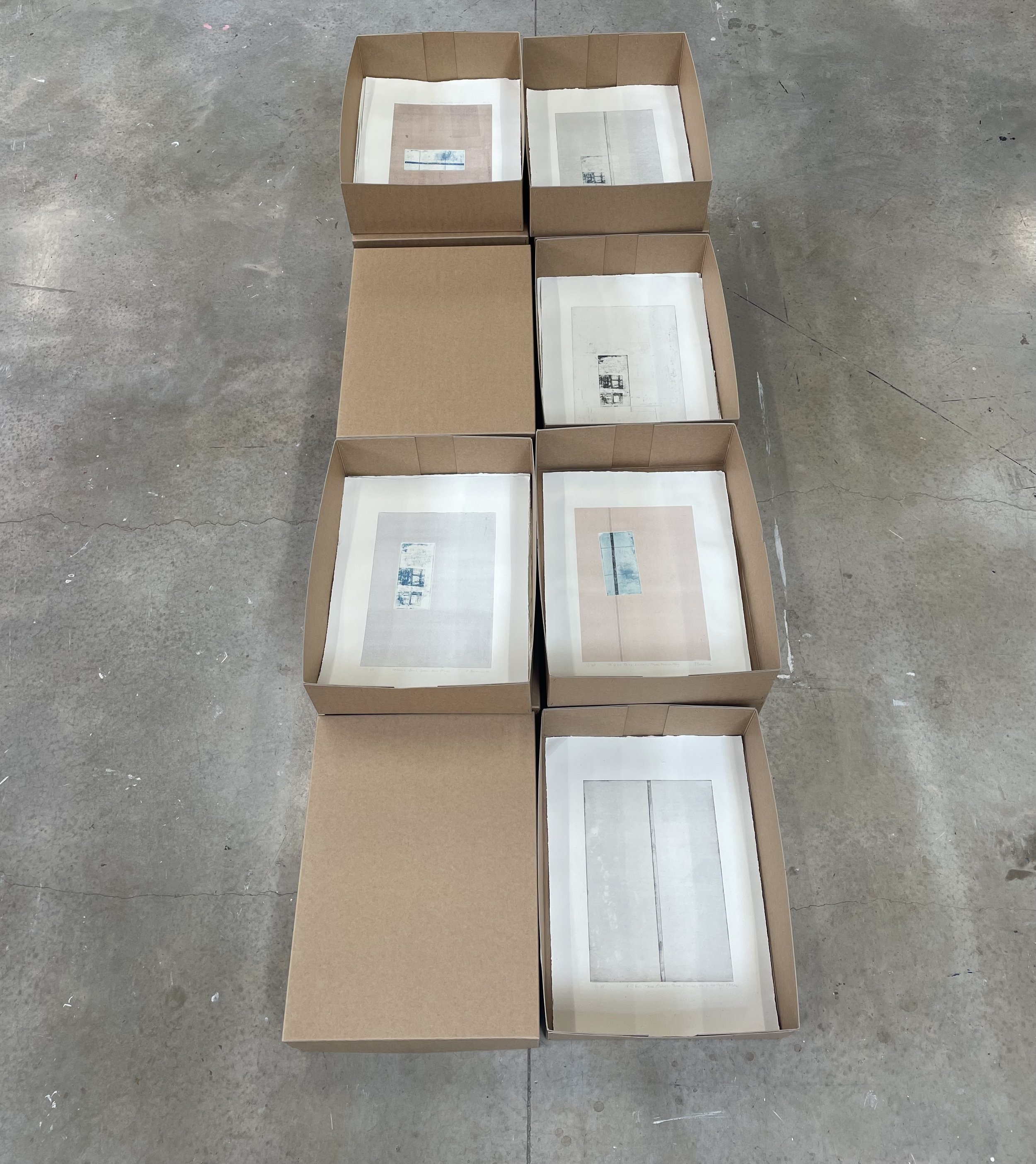
In the prints, the plate stays the same, but each wiping redistributes the ink differently. Rather than removing, the wiping produces variation within a fixed structure. This mirrors the dishwasher, where the grid remains stable while objects are rearranged as they are loaded and unloaded over time.
Wiping is a repeated physical action that brings the body into the work through movement, pressure and rhythm. Each pass records a moment of contact, so the surface holds both energy and duration. The process reflects the intensity of making and noticing, where attention shifts across the surface but is contained within the structure of the print.
A continuous vertical line runs through the work, cut into the plate but shifting in intensity through wiping and pressure. It connects the prints to the film and to the wider installation, echoing the lines of the dishwasher rack and the grid structures that underpin the work. The line acts as a point of connection, like a stitch, holding together surface, space and time.
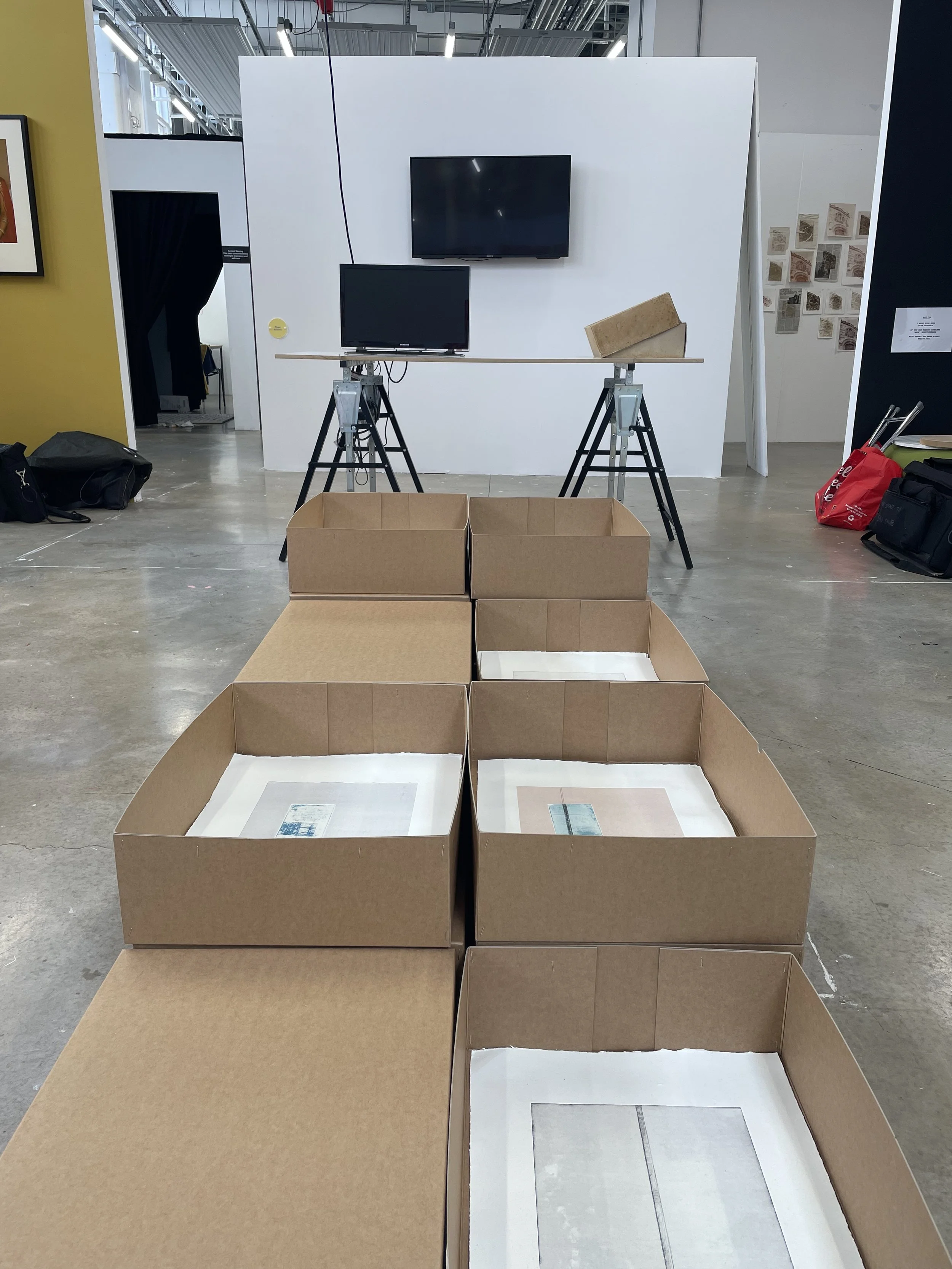
The prints are housed within boxes, forming a repeated rectangular structure. The box becomes a space of containment and accumulation, holding individual moments of making. Through use, the boxes register time through subtle wear and handling. They act as a form of storage, mirroring systems of domestic order where labour is often hidden from view.
The work reflects on forms of unseen labour — repetitive actions that are only noticed in their absence. Both the loading of the dishwasher and the wiping of the plate become ways of holding time, where moments of creative attention exist within the constraints of everyday routines